Cycle 15 - Item 35 9 (Fri) February 2024 Jjajang Myeon 2.5 at Jjambbong Pumgyeok -Seongsu, Seongdong, Republic of Korea- solo Watched Part 1 of a documentary called Jjajang Myeon Rhapsody on Netflix last night. It's the fourth in a series, whi…
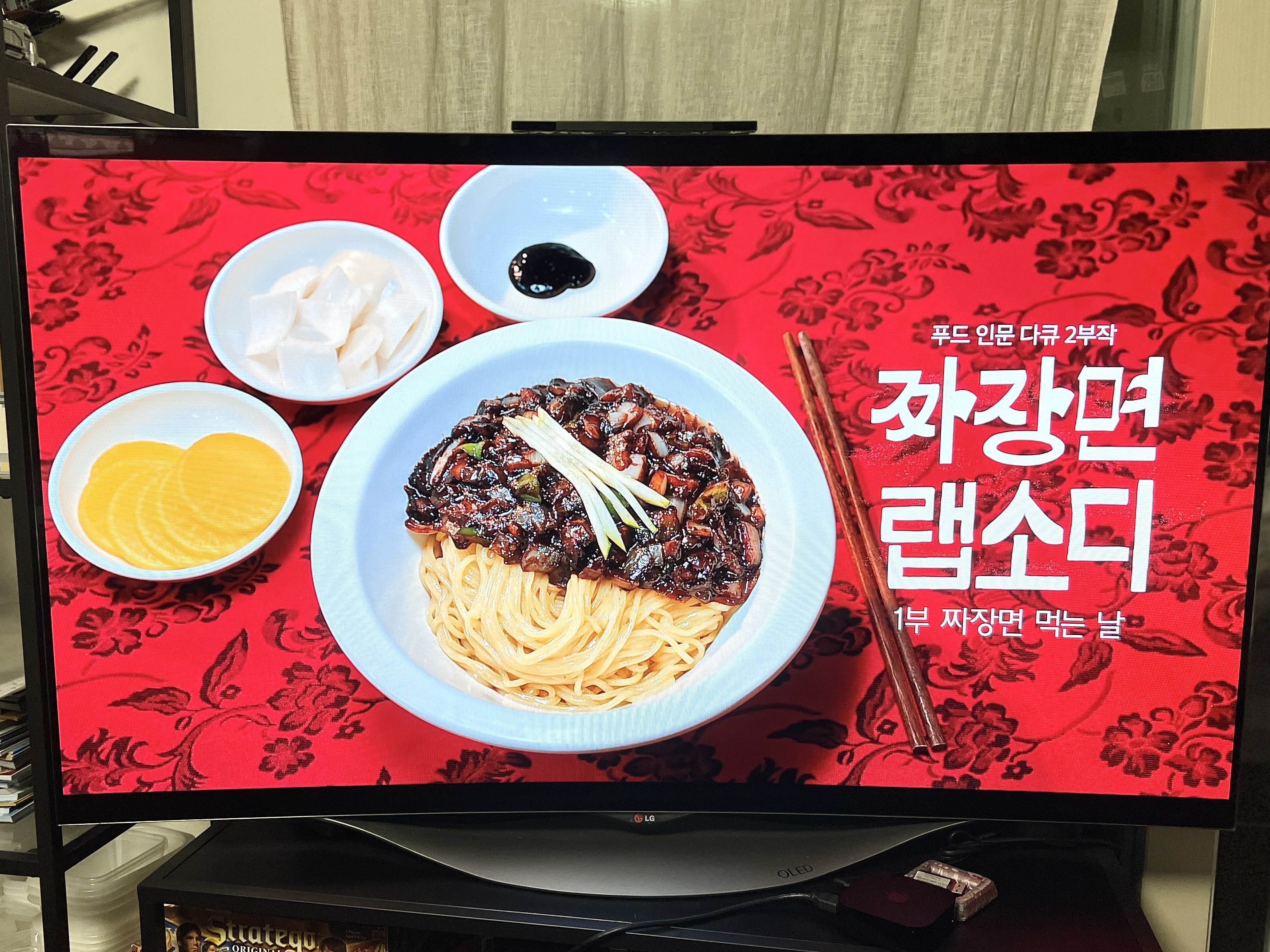
Watched Part 1 of a documentary called Jjajang Myeon Rhapsody on Netflix last night. It's the fourth in a series, which also includes Korean Pork Belly Rhapsody (2020), Korean Cold Noodle Rhapsody (2021), and Korean Hanwoo Rhapsody (I haven't (yet) viewed the others), all hosted by Paik Jong-won. Through interviews with chefs, academics, and celebrities, the episode describes jjajang myeon's origins, how it's made, and its cultural/historical significance and ubiquitous popularity today. The host visits various restaurants to sample the dish and its regional variations.
Despite the title of the 2-part documentary, only Part 1 covers jjajang myeon; Part 2, to be released next week, will cover jjambbong.
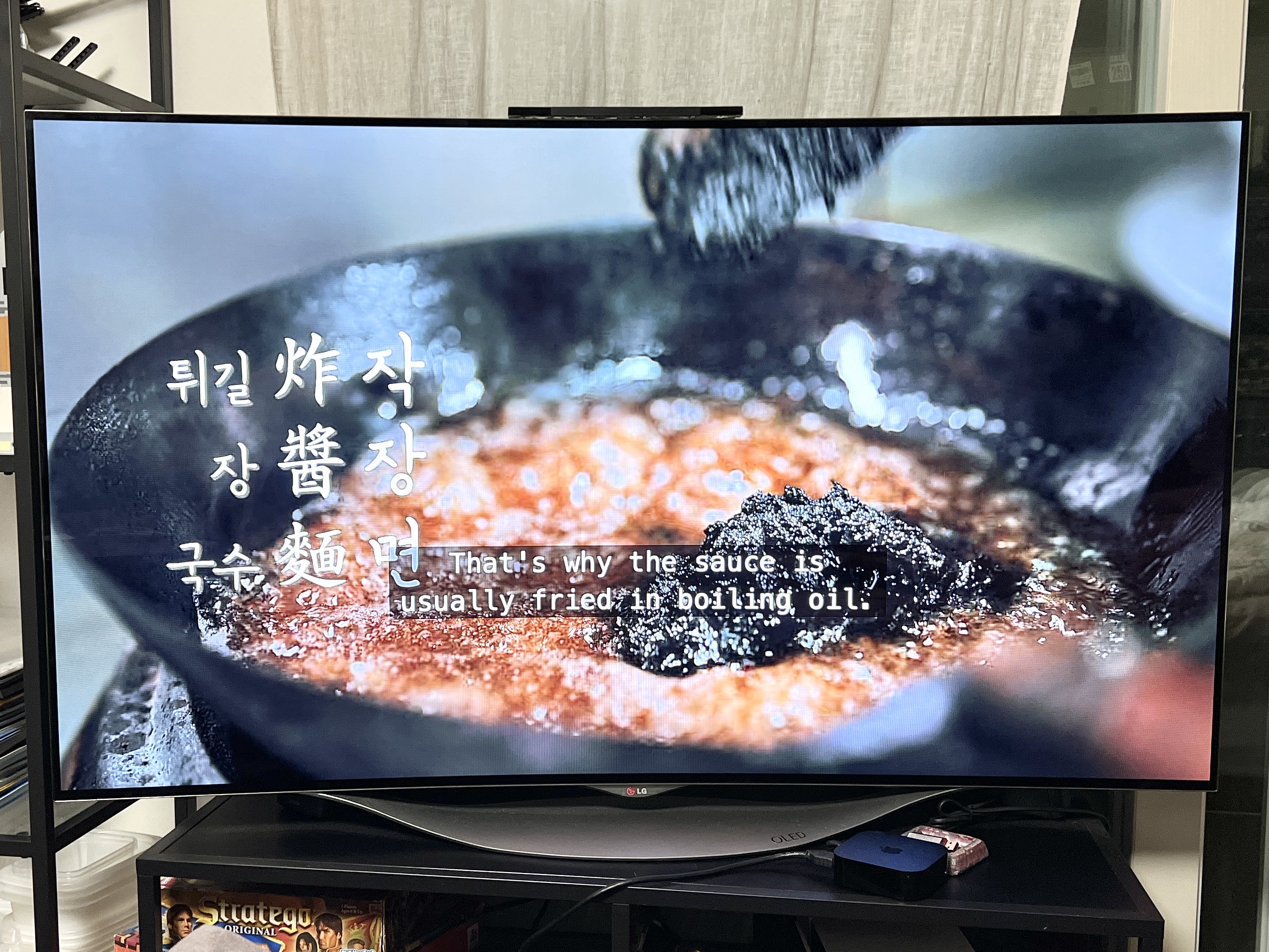
The name of the dish derives from the Chinese "炸 (zhia) (fried)" + "酱 (jiang) (sauce)" + "面 (mian) (noodles)." Technically, those characters are pronounced "jak + jang + myeon" in Korean, but the first part is pronounced "jja" (closer to the Chinese), so the name is a mix of the two languages - I got this wrong in a prior post (see 4.061 Jakjang Myeon).
To make the base sauce, fermented black bean paste is first deep-fried in oil - hence the name.
What drove me crazy while watching the program is the underlying assumption that jjajang myeon, and more broadly the restaurants serving the dish, are Chinese. The talking heads say things like, "Jjajang Myeon is the ultimate Chinese dish... For many children, jjajang myeon is their first experience with exotic foreign cuisine...." Even the chefs, 3rd or 4th generation Chinese-Koreans who grew up in restaurants founded by their grant/great-grandparents, seem completely oblivious to the fact that what they make is entirely different than anything found in China (briefly, the host does mention in passing that zhiajiang mian in China, made from yellow bean paste, does not resemble jjajang myeon in Korea).
Jjajang myeon, through a century of divergent evolution, has become a wholly Korean thing, as are other dishes in the Korean-Chinese tradition - so much so that actual Chinese people don't recognize it as Chinese food (see for example 14.306 Palbochae (and Other Non-Chinese Dishes)). Indeed, the raison d'être of this Rhapsody series is to showcase aspects of Korean cuisine that Koreans are most proud of. So, stoping calling it "Chinese" and just embrace it as Korean.
I just realized that Korean ramyeon, arguably even more popular/ubiquitous than jjajang myeon, derives from instant Japanese ramen; similarly, it has transformed over the years to become fully Korean, and it's now regarded as Korean, never Japanese (though that probably has other factors in play).
After establishing his credentials as a chef with the Bonga restaurant chain - which is where GMTD was born (see 1.001 Grilled Pork Galbi) ("bonga = house of origin") - Paik Jong-won (alternatively, Baek Jongwon) gained even more popularity by licensing his name to countless restaurant chains, such as Go to Wok (see generally 13.295 One Pick), Rolling Pasta (see generally 12.329 Tomato Pasta); now, he makes videos that show him eating foods and making goofy faces.
In any case, the program inspired me to have jjajang myeon for lunch.




No comments:
Post a Comment