-Godeung, Sujeong, Seongnam, Gyeonggi, Republic of Korea-
with IZ
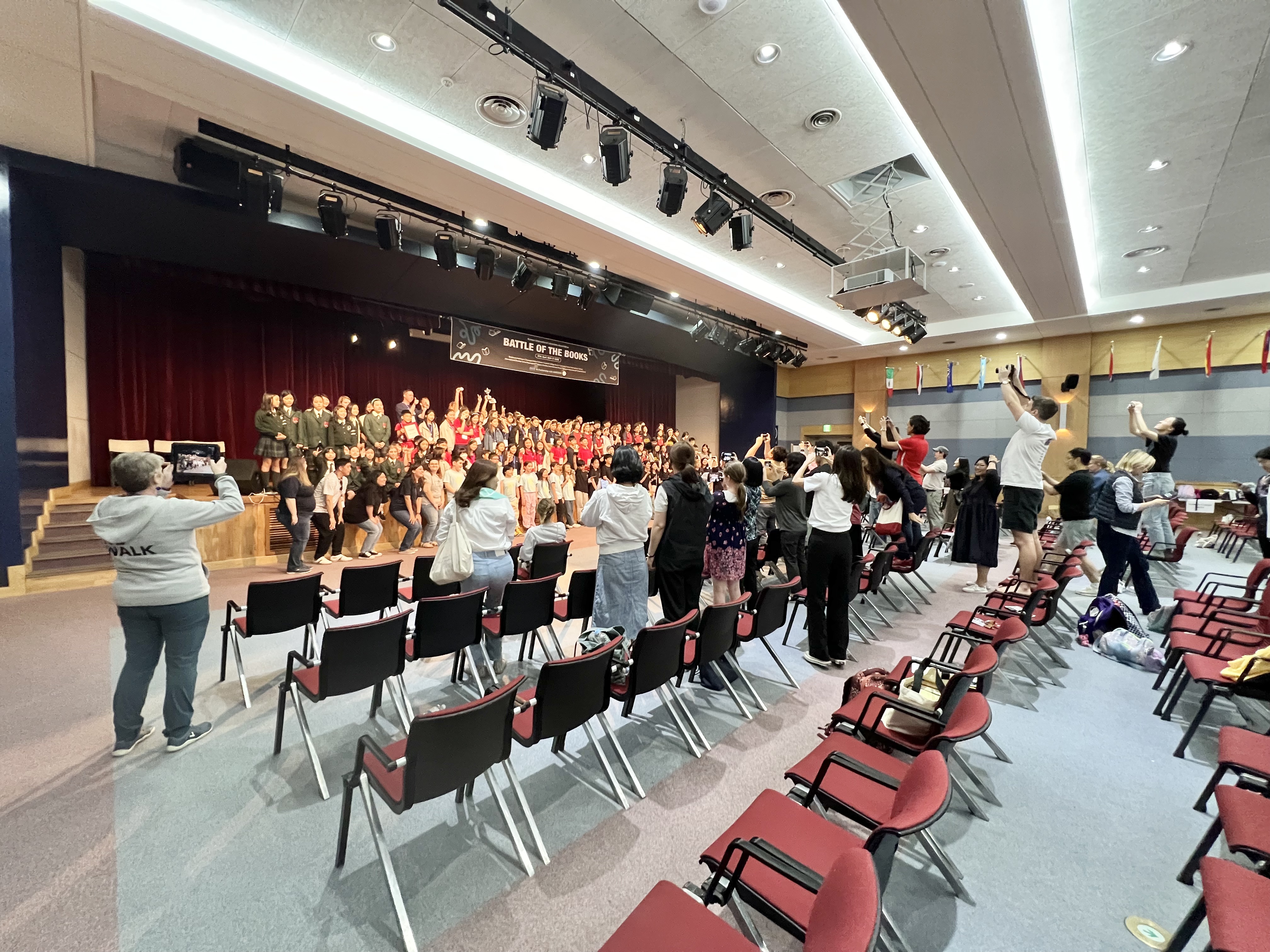
As we had last year (see 14.086 Black Pepper Shrimp), dbBOOKS sponsored this year's Battle of the Books. We gave out gift certificates to members of the first and second place teams. The event was held at GSIS, where we'd recently held a book fair (see generally 15.105 Chicken & Mushrooms). I dragged IZ along, arriving in time to watch the final match-up and the award ceremony.
GSIS won; last year, TCIS had won - home field advantage.
Afterwards, on the way home, we dropped by Daeseonggak for an early dinner.
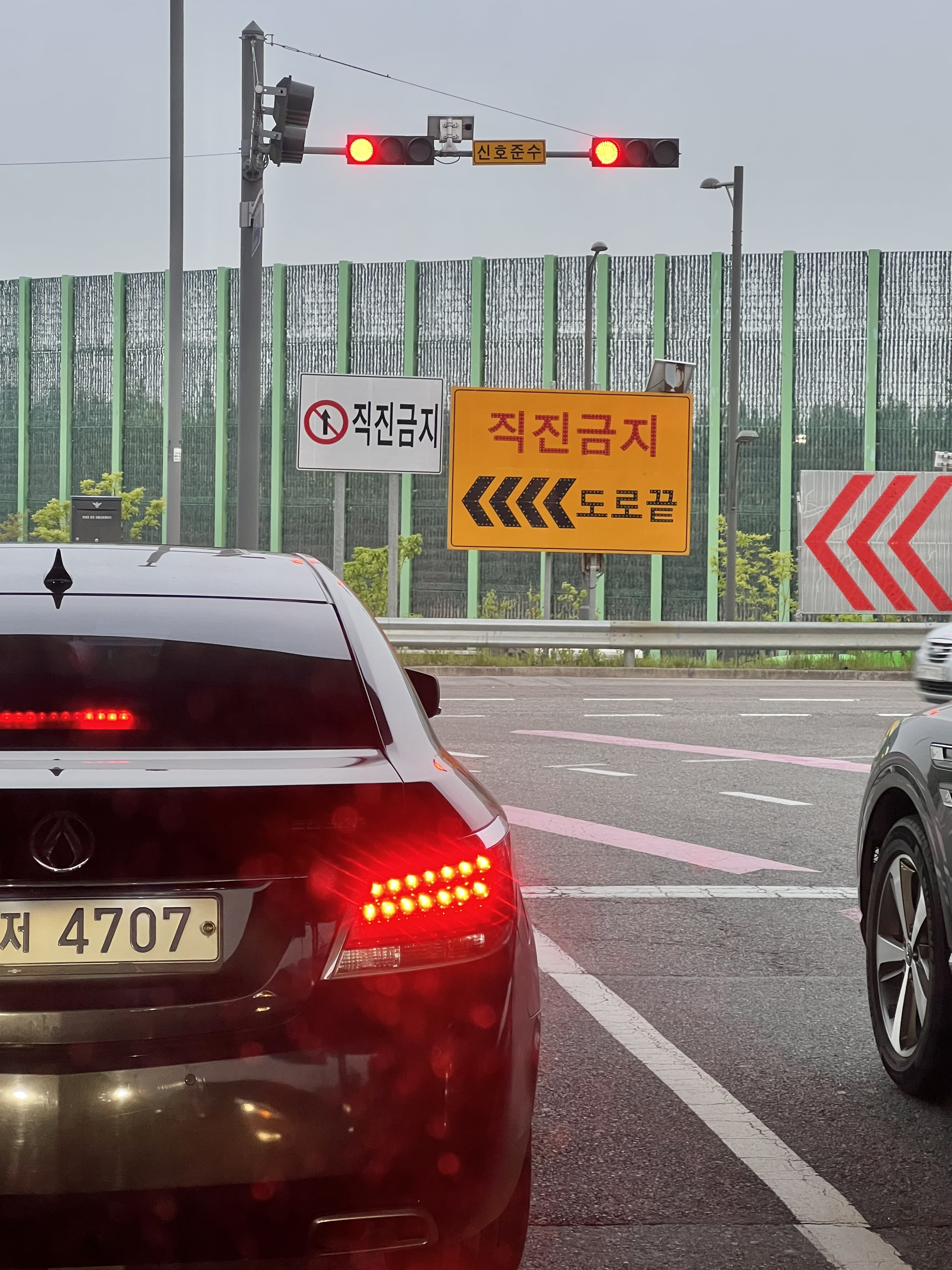
We drove past these signs, which I'd noted on previous trips.
The following observation, entirely unrelated to food, is the kind of tangential rant that would ordinarily be relegated to a short quip in the photo caption, but the whole thing is so dumb that it deserves full exposition in a standalone paragraph.
At the end of the road, I was struck by the array of signage directing cars to turn left (towards the one-way on-ramp to the expressway). The intersection already has what would seem to be sufficient infrastructure in place to ensure the proper flow of traffic: a stoplight with a left turn signal, a clearly visible metal guard rail, and (as if that weren't enough) a towering screen with bright green poles showing nowhere to go beyond this point. But then some idiot, probably late at night, perhaps under the influence, wasn't paying attention and didn't notice the stoplight and crashed into the guardrail. Which prompted the authorities to install the first sign, the white one on the right with big red arrows (chevrons) pointing left. Then another crash. Which prompted the authorities to install the second sign, the white one on the left with a forward arrow crossed out - in case the chevrons in the first sign weren't clear - plus black lettering stating "through driving prohibited" - you know, to explain the crossed out arrow. Then another crash. Which prompted the authorities to install the third sign, the big yellow one in the middle with big red lettering stating "through driving prohibited" - in case the "through driving prohibited" in the second sign wasn't clear - plus black arrows (chevrons) pointing left - in case the red arrows (chevrons) in the first sign or the crossed out arrow in the second sign weren't clear - plus black lettering stating "end of road" - so as to explain why through driving is prohibited. What initially drew my attention to this whole thing is the declared "prohibition" of through driving, which is nonsensical because that would imply through driving to be physically possible yet not allowed (for whatever reason); but in fact, through driving here is impossible, so it doesn't need to be prohibited - if anything, a right turn is actually possible but prohibited.
7) cooking implements out in the open, including a takeout station [left], a refrigerator containing vegetables and other ingredients [center], and a rice cooker [right], as well as other random items strewn on the floor.
In a prior post, I described various things that signal a Korean-Chinese restaurant's ambition to rise above (see 15.061 Yuni Jjajang Myeon).
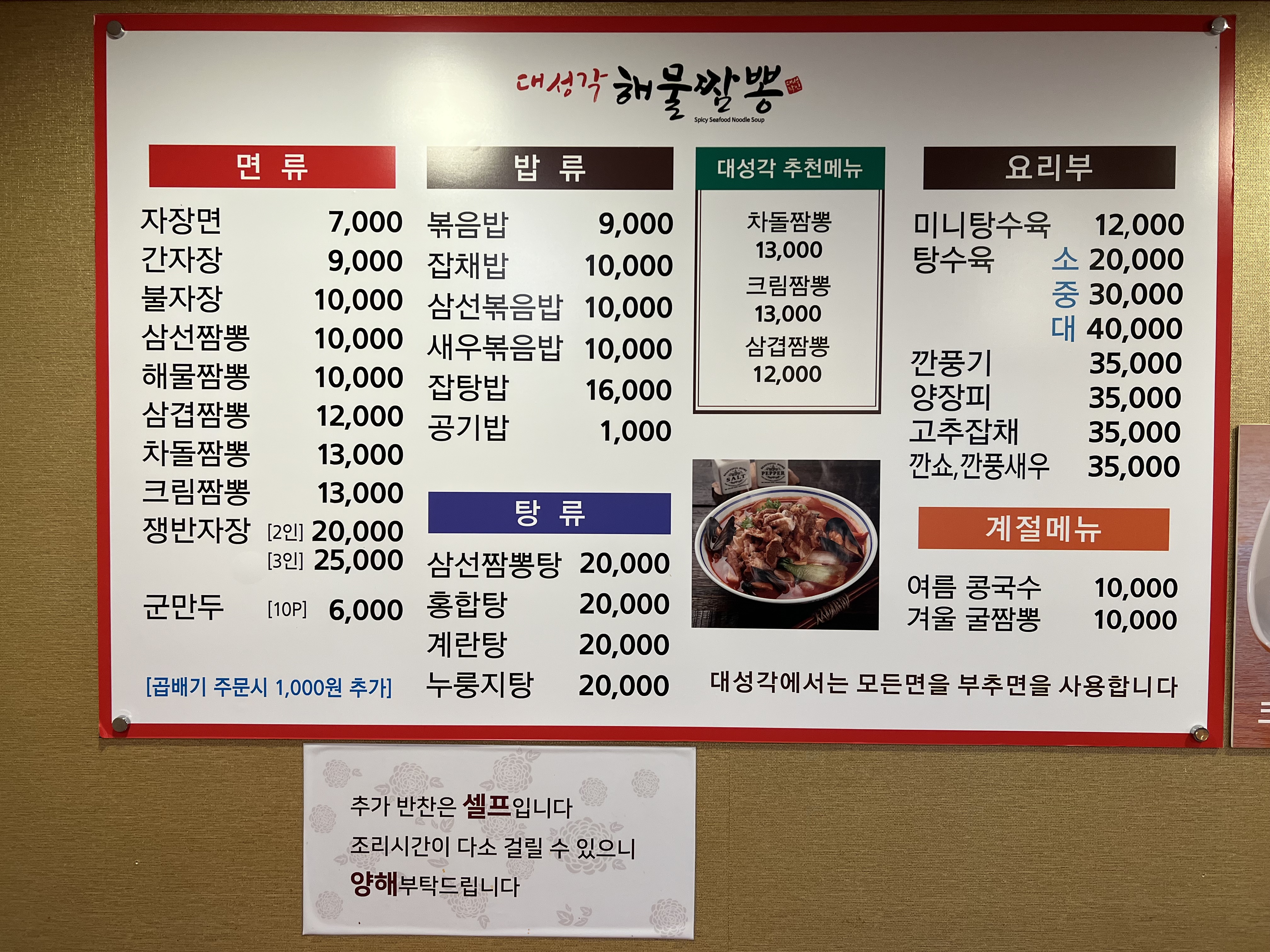
1) menus, as well as other signage, posted on the walls, including a notice advising that refills on banchan are self-service, and that cooking times may vary so patience is appreciated.
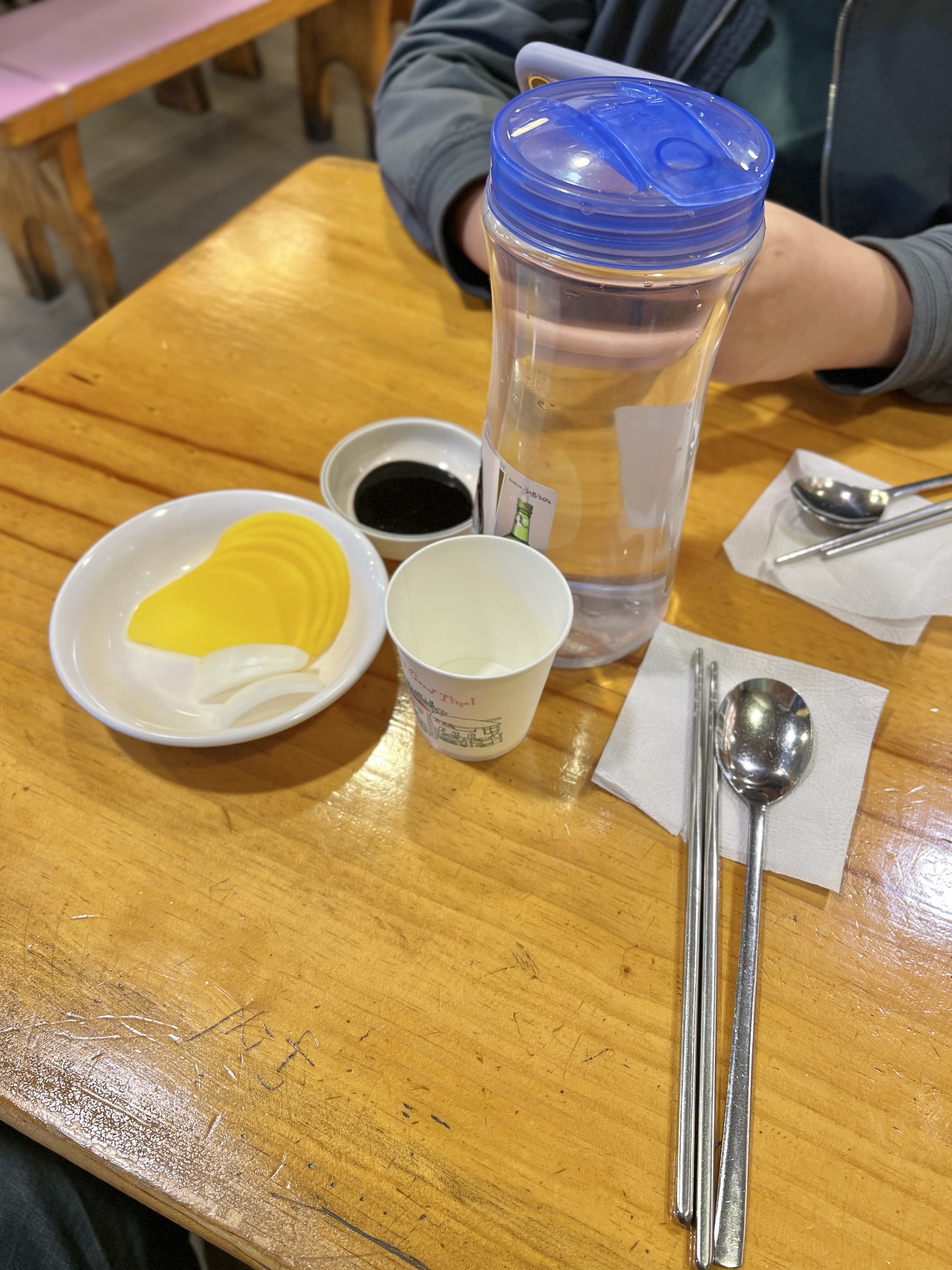
Conversely, the 6 things that signal a Korean-Chinese restaurant is perfectly content to be nothing more than a neighbrohood delivery joint: 1) menus, as well as other signage, posted on the walls; 2) plastic plates and paper cups, 3) bare tables; 4) stainless steel utensils, directly accessible to the customer either in a box on top of the table or in a drawer under the table; 5) water (not tea), often served in a plastic carafe (supplied by beer/soju companies); 6) banchan consisting only of pickled radish slices and chopped raw onions; and 7) cooking implements out in the open.
2) plastic plates and paper cups, 3) bare tables; 4) stainless steel utensils, directly accessible to the customer either in a box on top of the table or in a drawer under the table; 5) water (not tea), often served in a plastic carafe (supplied by beer/soju companies).
The samgyeop jjambbong was good. Hoping that the addition of pork belly (samgyeop) would elevate the dish to another level - like when restaurants first began adding beef brisket (chadol) (see for example 10.271 Chadol Jjambbong), which was revolutionary - I was disappointed to find that the dish was just the restaurant's seafood (samseon) jjambbong with a few slices of pork belly tossed in, no discernible impact on the overall flavor profile. Perhaps they should try going all-in with only pork belly, though that would likely be extremely fatty, maybe revolutionary.





No comments:
Post a Comment